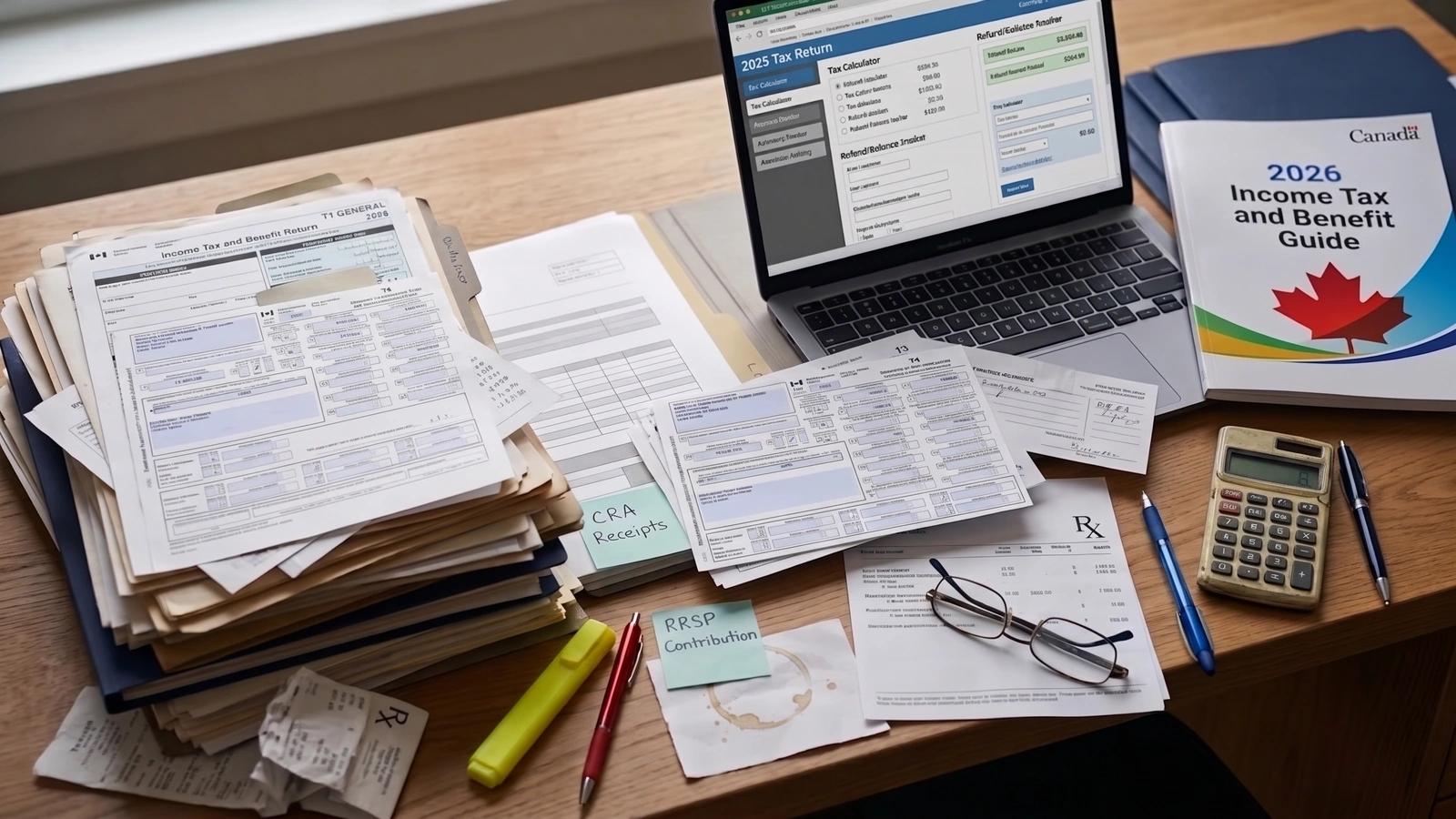
A useful personal tax checklist starts with your circumstances, not a demand to collect every possible receipt. Begin with the core records below, then add the sections that apply to your income and life changes. This is a preparation guide for a Canadian personal return, not a determination of what you can claim.
Key points
- Start with the return year, your income sources and changes in personal circumstances.
- Add only the record groups that apply, and flag missing or replacement slips.
- Bring receipts for eligibility review; a document alone does not establish a deduction or credit.
Start with a core information folder
- Confirm which return year is being prepared. Keep records for different years separate, and identify any earlier return or unresolved CRA notice that also needs discussion.
- Have current identification and contact information ready for secure intake, including your legal name, address and date of birth. Confirm your province or territory of residence and flag any move.
- Gather your previous return, latest notice of assessment or reassessment, relevant CRA correspondence and records of tax instalments paid. These provide context for questions; they do not replace the records for the return being prepared.
- Make a list of every income source, including employment, pensions, investments, benefits and any business or rental activity. Note sources for which you have not received a slip.
- Summarize marital-status changes, spouse or common-law partner information, dependants and other significant family changes. Record relevant dates so your preparer can ask focused follow-up questions.
Tell your preparer early about arrival in or departure from Canada, possible non-resident status, cross-border work, foreign income or an estate situation. Specialized residency and other unusual matters need separate assessment before the firm confirms whether it can assist. A checklist cannot decide residency or the resulting filing obligations.
Add the income records that apply
- Employment, pensions and benefits: collect applicable slips, such as T4 and T4A slips and pension or benefit statements. Keep amended versions clearly marked and identify which document they replace.
- Investments: gather applicable T5 and T3 slips, account statements and supporting purchase and sale records. Flag transactions needing clarification rather than assuming one slip describes the whole situation.
- Self-employment: organize sales and other income records, invoices, expense receipts, bank records and asset purchases or sales. Explain business versus personal use and identify missing records. If vehicle or workspace costs may be relevant, ask what supporting details are needed before treating them as deductible.
- Rental activity: group rent received, expense records and statements by property. Include ownership details, periods of rental or personal use, and records of purchases, sales or significant work. Ask for assessment of expense treatment rather than treating every property payment as a deduction.
For self-employed readers, the related monthly-bookkeeping preparation checklist can help organize business records throughout the year. It is not an extra requirement for someone whose return involves only employment or pension income. An incorporated business's corporate return is a separate engagement from its owner's personal return.
Gather possible deduction and credit support
Keep relevant receipts and explanations together so the preparer can assess the applicable rules. Depending on your circumstances, useful categories may include:
- RRSP contribution receipts and other relevant registered-plan documents, with contribution dates and any related questions clearly identified.
- Medical expense records showing who received the service, what was paid and any reimbursement from insurance or another source.
- Child care receipts and details of the child, provider and care period, together with relevant family circumstances.
- Tuition documents, donation receipts and other records for deductions or credits you want to discuss.
- Employment-expense documents, if relevant, including employer-provided information and an explanation of the expense and any reimbursement.
Track missing information and share securely
Compare the documents received with your income-source list. If a slip is missing, ask the issuer for a copy and tell your preparer what is outstanding. A CRA account may contain slips the CRA has received, but it cannot supply a slip before the issuer sends it. Do not assume that an online collection is complete. Discuss next steps if information cannot be obtained.
Use clear filenames showing the year, issuer and document type, and keep a short list of open questions. Retain original records and identify replacements to avoid duplicate entries. Do not send your SIN, tax slips, banking details or account credentials through the general inquiry form. Agree on an appropriate secure sharing method after the initial scope discussion.
Personal Tax Returns is the primary service for discussing your T1 preparation needs. Describe your income sources, major changes and missing records in the initial inquiry. You remain responsible for providing complete information, answering questions and reviewing the prepared information before agreed filing steps. Monthly Bookkeeping is a separate option only for self-employed readers needing ongoing business record support; it is not included in personal return preparation.